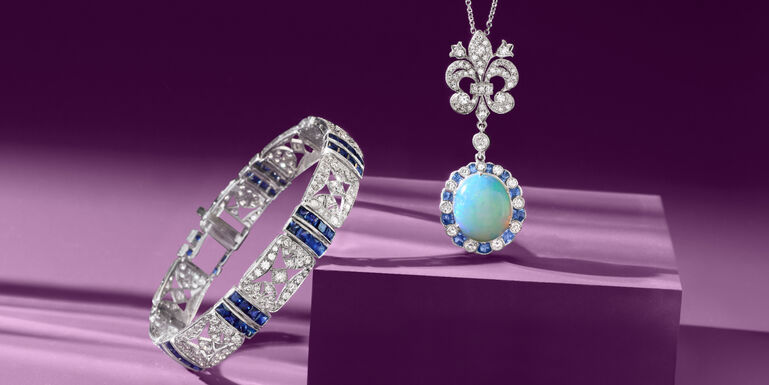
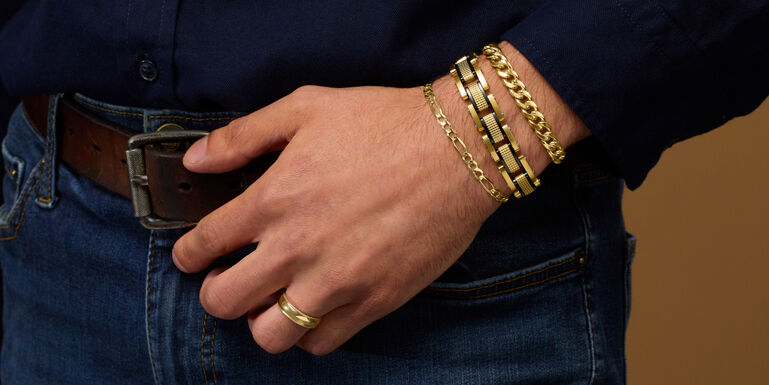
Discover the World of Estate Jewelry
What Is Estate Jewelry?
Estate jewelry is anything previously owned, whether purchased at a jewelry store or passed down by a family member or close friend. Some people love to share their treasures and offer them as inherited pieces or gifts for a special day, like a wedding. The definition goes deeper, as estate jewelry can be modern, vintage or antique. Regardless of the exact age or specific origin, they are all pre-loved pieces looking for a new home.
Many jewelry lovers treasure estate jewelry pieces for their distinctive and special qualities. Every piece has a fascinating story, and those endearing, one-of-a-kind details add to their appeal.
Estate engagement rings, for example, are often a cherished find since they are such a special part of the original owner’s life story. Most times, these rings are considered classical treasures steeped in romantic sentiment, well cared for from the moment they were first acquired. If a piece comes from a family member, the recipient is likely to value it even more. Even when a piece is picked up from a jewelry store, the shopper can still experience an indescribable sensation where they almost feel the essence of the item’s rich history and perceived origin. The French call it "lien spirituel," or a spiritual connection – and this concept is part of what makes estate jewelry so magical and appealing.
It’s fun to get creative while browsing estate jewelry by matching items of the same era for a truly cohesive experience – like a stunning vintage watch with a magnificent necklace or earrings from the same period. You don’t have to always stick to the rules, either. Other times, it’s just as enjoyable to show off your eclectic fashion sense by pairing and mixing various brands and periods of jewelry for a truly singular aesthetic. With estate jewelry, you can accomplish a unique vintage look that allows you to wear your finest accessories in a way that complements your personal style, whatever that may be. The secret is to keep searching for the pieces that speak to you and your individual taste – and fully bask in the journey of discovering all the treasures waiting to be worn by you.
Depending on your preference, there are many ways to track down beautiful pre-owned jewelry. Some collectors scour vintage and antique shops for great estate jewelry finds. Others may check out in-person estate sales in their area. Today, one of the most popular ways to shop for estate jewelry is online with a jewelry store that has an impressive selection and expert buying team to help answer questions – a great way for the shopper to feel more comfortable and confident in the original craftsmanship.
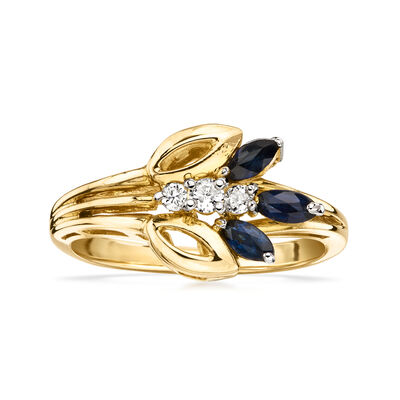
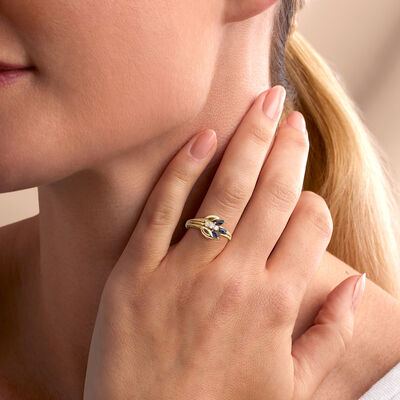
What Is the Difference Between Estate, Vintage and Antique Jewelry?
Great question! The three words "estate," "vintage" and "antique" may seem similar, but using them interchangeably does not always work.
- Estate jewelry is a general term for anything previously owned.
- Vintage jewelry is anything over 20 years old.
- Antique jewelry is anything over 100 years old.
So then, vintage and antique pieces all fit under the umbrella of estate jewelry, but estate jewelry is not always vintage or antique – those specific designations relate to how old the specific item is.
Estate Jewelry
Since estate jewelry is a general term for pre-owned items, the length of time the item was owned does not impact this label. Even if a piece is only two weeks old, you can call it estate jewelry if it had a previous owner. Sometimes, you’ll find an item that looks brand new but is actually an estate piece – that’s a great find! It’s also important to know that pre-ownership does not devalue the item. In fact, countless collectors find estate jewelry more valuable because of its unique history.
Estate jewelry can be hard to find depending on the specific style desired. Since everything old becomes new again when someone discovers it for the first time, this element of rarity adds to its appeal and overall value.
Some of the best estate jewelry finds are from well-known designers who bring their special flair to these lovely wearable art items. A shopper would be delighted to find a beautiful pair of sapphire or diamond Buccellati earrings accented with vibrant red enamel, or a graceful geometric H. Stern bracelet dazzled with tiny diamonds. Others will be intrigued by something bolder, like a David Webb dinner ring set with many colored gemstones and diamonds, or a timeless Tiffany Jewelry brooch. When you frequently browse estate jewelry listings, you never know what you may discover!
Vintage Jewelry
Any piece of jewelry between 20 and 100 years old is considered vintage jewelry. If you’re interested in getting started with a collection of vintage jewelry, it’s good to know the item’s history before purchasing. Note the circa year to verify when the item was created, as well as any pertinent information about the piece. When shopping in person, examine the piece in good lighting to assess its condition. Online, look closely at the images.
Finding and picking the right vintage piece is an interesting challenge. Vintage jewelry is a long-term investment in terms of both finance and fashion. Because vintage jewelry encompasses styles from over 80 years, the selection is utterly enormous. From diamond earrings to silver bracelets to sapphire rings and somber mourning pieces, a collector could search for a lifetime and barely scratch the surface of the incredible vintage treasures that are available in the marketplace.
For those with an affinity for simpler times and the elegance of yesteryear, vintage-style jewelry will always be in fashion. Compared to antique jewelry, it is easier to find these pieces, which is ideal for the shopper. Fan favorites include Retro-era pieces, movie star-inspired jewelry from the 1940s, Jacqueline Kennedy-style 1960s jewelry and over-the-top designs from the ‘70s and ‘80s.
When browsing vintage jewelry, you’ll notice unique cuts, vibrant color combinations, brilliant gemstones and high-quality settings. You’ll also be moved by the sentimentality steeped in these precious items. For example, a vintage diamond engagement ring captures the romance of a bygone time. Diamond solitaire rings, heart and flower rings, pins, hair accessories and rhinestone necklaces call to mind the beauty of femininity and may remind the wearer of all the stylish women who came before her.
Gift a gorgeous vintage diamond necklace to your wife on her birthday to surprise and delight her. Consider unique vintage brooches and pins, which may include pink shell cameos, multicolored enamel work and precious gemstone accents. These beauties add life to an outfit and a touch of esteemed glamor. Their rarity is also a valuable trait, allowing the new owner to feel like they’ve acquired something truly special.
Fall in love with vintage watches from brands such as Tiffany Jewelry, Belfont or Concord. Many estate vintage watches originate from the finest Swiss watchmakers as well as select models from well-known American names. Watches set the tone and style of an ensemble, especially when they're accented with precious gemstones and diamonds.
As you browse through vintage jewelry, be sure to welcome the many surprises and treasures you discover. You're turning old into new, making a special selection that you’ll always cherish with pride.
Antique Jewelry
Jewelry crafted over 100 years ago is considered antique jewelry. These pieces are hard to find and usually more expensive because of their rarity – but wearing, and even holding such a treasure is a rewarding experience. First, there is the excitement of the hunt. Then, once captured, the next chapter of the story begins.
When browsing for antique jewelry, it’s best to define with each seller what they consider estate, vintage and antique at the start. Discover for yourself a little about the style and characteristics indicative of a specific era. The most common periods for antique jewelry are Victorian, Art Nouveau and Edwardian, plus a few overlapping years of the Art Deco era.
Besides the remarkable appeal of owning an antique engagement ring or wedding band, there is something collectors call “passion investing,” which is less about the return on the investment and more about purchasing items that the collector truly loves. When you buy antique jewelry, the quality and characteristics differ from other kinds of investments. Personal interest, legacy, history and scarcity become important to the collection, just like with art collectors who strive to acquire original paintings of yesteryear. Antique jewelry pieces are just as special and unique.
Each period of history has an era associated with it, and thus, specific jewelry styles and signatures evocative to that particular time. For example, artisans of the late Victorian period crafted pieces with diamonds and bright gemstones, like peridot and sapphire, while Art Nouveau jewelry inspired by French designer Rene Lalique or American artist Louis Comfort Tiffany often uses floral and butterfly motifs. Modern art influenced the Art Deco period, which favored geometric designs, vivid colors and sharp lines. During this era, women donned long necklaces and many bracelets at the same time.
When reflecting on the jewelry eras that came before us, it’s only natural to wonder – what will antique jewelry mean to future generations? Will family heirlooms live on -- a pair of sapphire or diamond earrings passed down from grandmother to mother to daughter or son? How will they be worn? If you feel an emotional connection to these pieces and a sense of excitement to carry on their legacy, learning about and collecting antique jewelry can be a fulfilling hobby, investment and all-around wonderful way to spend your leisure time.
Jewelry Eras
Now that you have some familiarity with estate, vintage and antique jewelry, let’s learn more about the styles you admire most from each era.
Victorian Era
Victorian-era jewelry is considered antique, as it is over 100 years old. Its history extends from 1837 to 1901 when Queen Victoria reigned. The craftsmanship of Victorian-era jewelry showcases superior detail and skill, exuding an air of royalty. This era is well-known for brooches, rings and choker necklaces.
Jewelers during this period had little access to diamonds, so they often used emeralds, rubies and sapphires. Many engagement rings featured diamonds encircling the central stone with a halo of more diamonds.
Gold was also available, and jewelers tried new techniques, such as filigree designs and lacey ornamental details. Nature and romance were common themes, with floral, bird and heart motifs.
After Prince Albert died in 1861, Queen Victoria spent the rest of her life in mourning. Dark stones and colors appeared in some jewelry at that time.
Art Nouveau Era
Spanning from 1895 to 1915, Art Nouveau is another era of antique jewelry, with some designs and motifs that overlap with Victorian jewelry. Art Nouveau jewelry tends to be delicate, with many pieces inspired by nature, featuring one-of-a-kind designs and intricate details like beautiful enamel work.
During this time, as the world became more interconnected, jewelers started to discover new cultural inspirations, such as Japanese art. There was a focus on settings and metals, with an emphasis on silver and steel. Jewelers also cut stones to give them flat backs that would rest flush with the surrounding details of a setting to make it all the more interesting and unique.
Jewelers also experimented with mixed materials, crafting designs with seashells, ivory, carved glass, copper and other natural items.
Edwardian Era
During this era, people used accessories to show off their wealth or rank, which is why you’ll find quite opulent pieces from 1901 through 1914. There were plenty of beautiful minimalistic designs, as well, as jewelers also targeted the middle-class market.
Platinum became a celebrated material thanks to its strength and ease of use, allowing jewelers the ability to craft more intricate designs. During this time, women wore lightweight fabrics and softer colors, and jewelry followed suit with muted hues and delicate materials.
White on white was the new vogue, so pearls and diamonds became the height of sophistication. Wreaths, garlands and bows were common motifs for chokers, earrings and tiaras.
Art Deco Era
The transition from antique to vintage jewelry began during the Art Deco era, which ran from 1915 to 1935, starting after World War I. This period became known as the era of playful jewelry designs with bold, recognizable characteristics.
Moving on from romantic, feminine and nature-inspired elements, Art Deco-era designers favored geometric and abstract forms – jewelry with crisp, straight lines, sunburst patterns and angular features. Such visuals call to mind the world-famous Chrysler building aesthetic or the glitzy parties akin to the famous story of “The Great Gatsby.” Elegance was “in” once again, so diamonds reigned supreme, but you would also find eye-catching designs with bright contrasting colors and classic gemstones like rubies, emeralds and sapphires. More unique gems were also used, like jade, coral, turquoise, lapis and onyx.
An iconic time for style, the Roaring Twenties sat squarely within this standout era. The must-have piece on everyone’s list during this decade? The pearl necklace. Many of the looks of the 1920s came directly from Paris, specifically from influential designers like Coco Chanel, who became well-known for her love of pearls and amplified the style sensation even further as she launched her famous Chanel No. 5 fragrance in 1921.
Like Edwardian pieces, Art Deco designs leaned towards the presence of white on white and featured lots of yellow gold. Items from the 1930s often used white gold and platinum with round settings to show off sparkling diamonds on engagement rings.
Retro Era
The Retro era ran from 1940 to 1950 when times were dramatically changing. Women joined the workforce outside the home. Movie stars became prominent in the public eye. Style, flair and panache prevailed in bold jewelry with explosive, whimsical designs that highlighted this innovative and creative period. With Old Hollywood still at the center of pop culture, collectors craved larger-than-life accessories with dazzling details.
Designs were grand, often featuring feminine motifs like florals and bows. With the start of World War II, jewelers no longer had the same access to platinum, so they created green, rose and yellow gold, which introduced beautiful colors and unique patterns that caught the eye.
Though many people fell on hard times during this period of history, jewelry settings remained elaborate and impressive. Jewelers became more skilled at their craft, creating convincing illusions where center stones would look more prominent than they were.
Modern Era
The most recent jewelry period, the Modern era, includes vintage items from the 1960s to today. Though these items exude the most familiarity, it is fascinating to see how each decade truly does exhibit its own distinct style when looking through a present-day lens.
This period features many colorful pieces that express individuality and a carefree nature. Jewelers work with stones like turquoise and amethyst, making choices according to color preference rather than status. Animal and wildlife motifs are very popular, with elaborate designs and bright colors – think pendants and brooches featuring unique birds with gemstone features, enamel butterflies with wings of sapphires and amethysts, or unexpected creatures, like penguins and hedgehogs with glowing emerald eyes.
Modern jewelry in the 1950s used textured gold, adding glimmering filigree details that would catch the eye. Through the decades, abstract designs became prevalent, including the return of geometric forms, plus more futuristic statements, like starbursts that might reflect space exploration.
Jewelers crafted fine pieces that could be worn more regularly, using high-quality, genuine stones and precious materials that would endure. Daytime pieces were more sophisticated, yet subtle, like plain gold accessories, while nighttime pieces would feature diamonds and gemstones that dazzle.
Where to Shop for Estate Jewelry
Enhance your estate jewelry collection when you shop at Ross-Simons. With an assortment of estate accessories from around the globe, it's never been easier to discover the estate jewelry you desire.
Browse our vast selection and find endless treasures, including:
Rings: Find vintage rings with bright colors in Modern-era shapes and Art Deco designs, including romantic vintage options. Browse different engagement diamond ring styles and other eye-catching diamond designs.
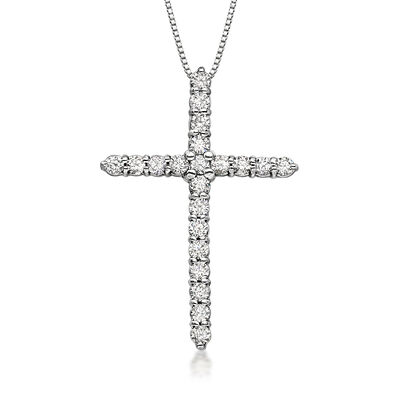
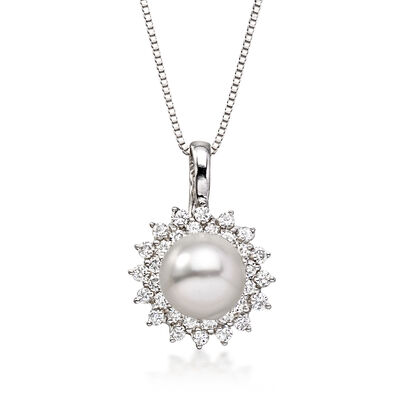
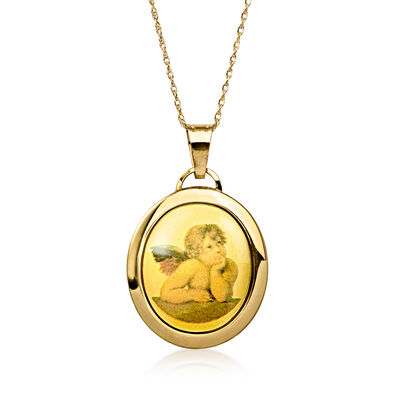
Necklaces: Discover a rich assortment of estate vintage necklaces. You’ll find choker styles, long chains, pendants and strands from every era.
Bracelets: Peruse Victorian bangles, Art Deco designs and other well-curated bracelet options. Choose from slim silhouettes or more spectacular wide-cuff styles that make a statement.
Earrings: Browse the many styles of vintage earrings that suit your taste. Explore dazzling drop designs from different periods, unique Retro styles, elegant vintage chandelier earrings and more.
Brooches: Embrace the whimsy of a vintage pin or brooch. From Modern designs to the elegant natural motifs of the Art Nouveau era to a 1940s pink cameo or 1930s diamond flower – you’ll find a beautiful assortment.