Metals & Finishes
When it comes to jewelry, metals and finishes go hand in hand – one often emphasizing the other. At a formal event, a stunning sapphire ring in perfectly polished platinum will get you noticed from across the room. Likewise, at an outdoor soirée, the sun might catch your shimmery diamond-cut gold necklace and give your whole outfit a gorgeous glow.
Beyond their influence on design and aesthetics, metals and their finishes are foundational features of your jewelry. Metal choice will impact the longevity and resilience of your pieces, while different finishes allow you to express your individuality and have fun with fashion.
Metal Types
Gold
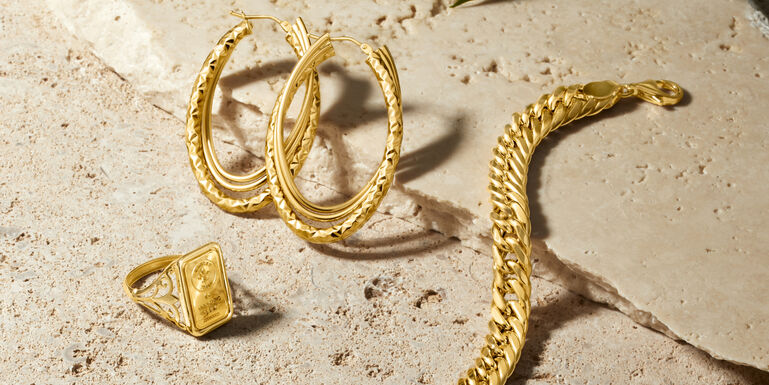
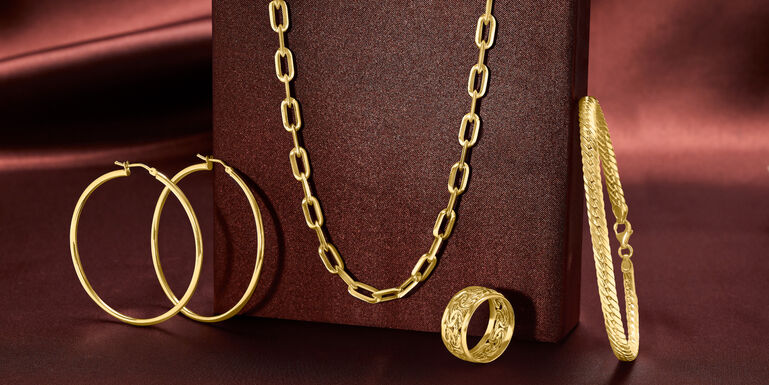
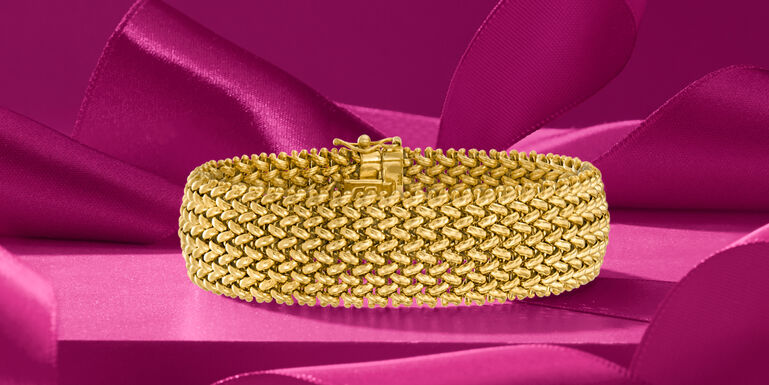
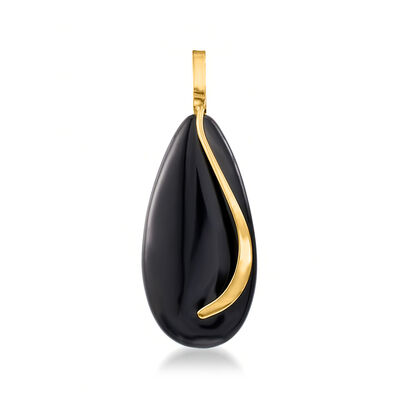
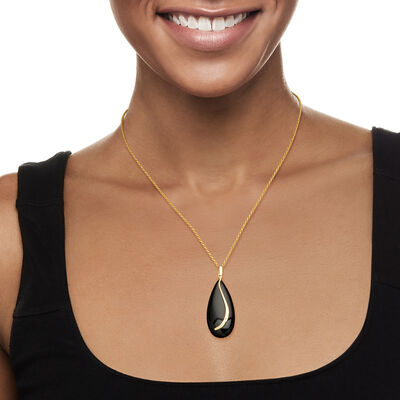
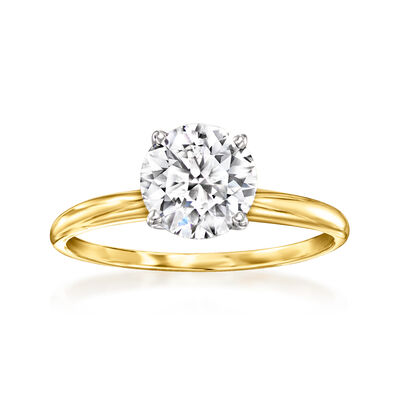
It’s no secret that gold is one of the most beloved jewelry metals. It’s been prized throughout history as a tried-and-true favorite for its rich and luxurious look, resistance to rust and tarnish, and stylish versatility – and its value only continues to rise. Gold jewelry is offered in various degrees of purity which are expressed in karats, most commonly 10kt, 14kt, 18kt, 22kt and 24kt. The higher the karat, the greater the percentage of pure gold. Pure gold is alloyed with different ratios of other metals to achieve various results of strength and color. The most popular gold hues? Yellow and white. For a more in-depth look at gold jewelry, keep reading here.




Platinum
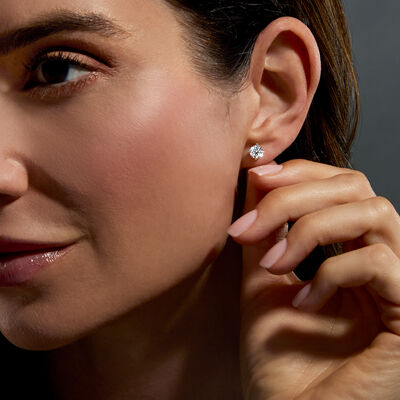
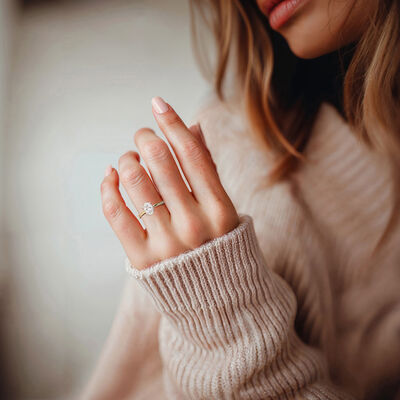
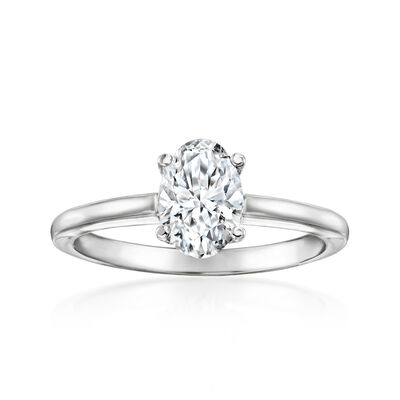
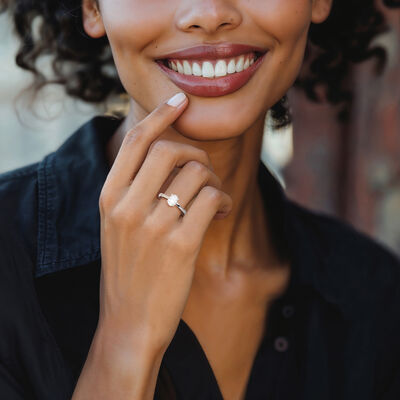
The crème de la crème of bright white metals, platinum is an opulent option for its high purity percentage and long-wearing durability. It’s hypoallergenic, does not tarnish, and is great for jewelry, such as diamond settings, since platinum prongs are strong and provide the best security for your beloved stones. It’s often the metal of choice for women who want to “upgrade” their engagement or wedding rings – a nod to its popularity and aspirational appeal. Platinum does dull over time but will maintain its white color and can be easily restored by cleaning, buffing and polishing. Browse this handy guide to learn more about high-end platinum jewelry.




Spring Sale: Up to 40% Off!
Spring Sale: Up to 40% Off!


Spring Sale: Up to 40% Off!
Sterling Silver
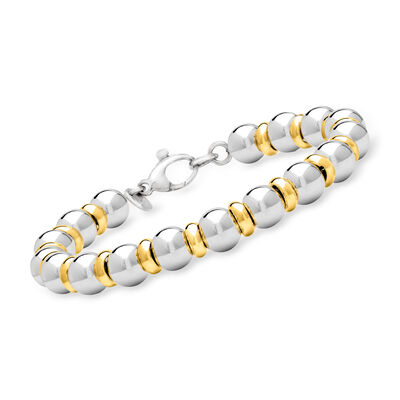
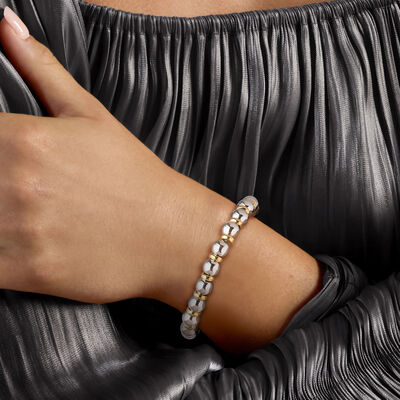
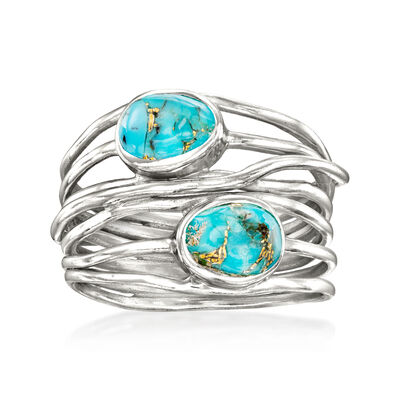
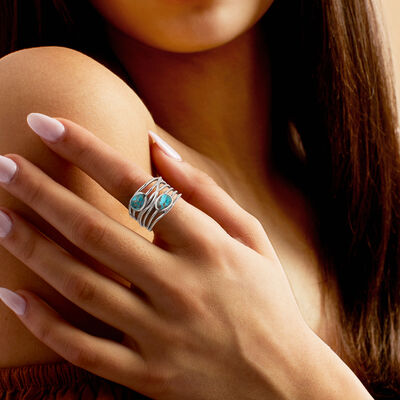
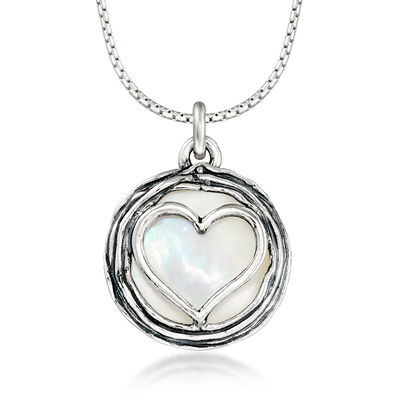
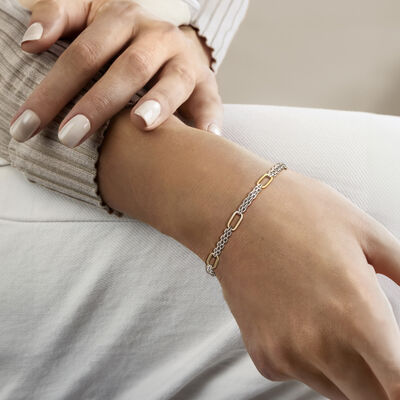
As one of the most affordable precious metals available, sterling silver is a popular everyday choice, beloved by savvy shoppers and avid jewelry wearers. Thanks to its malleable nature, sterling silver allows for unique and intricate designs, whether presented with a plain high-polished finish or embellished with gemstones or on-trend enamel. Learn more about this versatile metal.
Spring Sale: Up to 40% Off!
Spring Sale: Up to 40% Off!
Spring Sale: Up to 40% Off!

Spring Sale: Up to 40% Off!

Spring Sale: Up to 40% Off!
Spring Sale: Up to 40% Off!
Spring Sale: Up to 40% Off!
Spring Sale: Up to 40% Off!
Spring Sale: Up to 40% Off!
Spring Sale: Up to 40% Off!
Gold Over Sterling
Gold over sterling silver is one of the most popular options to achieve the luxurious appearance of gold for less. Because of its unique multi-layered composition, gold over sterling silver jewelry is more affordable than regular gold jewelry yet still offers a similar look and feel. Often conflated with vermeil, the difference comes down to the thickness of the gold layer.
Tungsten Carbide
A compound of tungsten and carbon, this heavy-duty metal features a strong scratch-resistant quality that makes it ideal for jewelry likely to be subjected to wear and tear. For this reason, tungsten carbide is a popular metal choice for men’s wedding bands.
Titanium
Known for its strength, titanium is another popular choice in men’s wedding rings. Other winning qualities? It’s 100% hypoallergenic, so it’s safe for sensitive skin. It also comes in a wide variety of colors and features a surprisingly light weight for its incredible durability.
Palladium
A member of the platinum family, palladium is a rare precious metal with a bright white composition and a high percentage of purity, like platinum. These qualities make it a high-end option for fine jewelry.
Learn more about tungsten carbide, titanium, palladium and other popular ring metals here to decide which is right for you.
Stainless Steel
Hard and ductile, stainless steel is a gray-colored metal made from iron and carbon. Since the discovery of its corrosion-resistant nature, its usage has broadened over time. Today, modern designers take advantage of its strength, durability, cost-effectiveness and contemporary look, using it in jewelry, watches, interior design, serveware and home accents.


Spring Sale: Up to 40% Off!


Spring Sale: Up to 40% Off!


Spring Sale: Up to 40% Off!


Spring Sale: Up to 40% Off!
Spring Sale: Up to 40% Off!
Spring Sale: Up to 40% Off!
Vermeil
To be categorized as vermeil, jewelry must feature a guaranteed 2.5-micron plating thickness of 10kt gold (or higher) over a sterling silver base. Like gold over sterling, the layered composition of vermeil offers a similar look to regular gold for a lower price.
Gold Filled
Gold-filled jewelry features a sheet of gold bonded to a base metal through a mechanical process of intense heat and pressure. This jewelry is fairly durable, resistant to tarnish, and costs much less than regular gold.
Bonded Gold
Bonded gold is a sheet of 14kt or 18kt gold that has been permanently fixed to sterling silver through a special heat-bonding process. Bonded gold is quite strong and long-lasting. Some shoppers choose this jewelry because it is another affordable and durable alternative to regular gold.
Gold Over Resin
Gold over resin jewelry features a karat gold with a copper-plated resin core. The process used to create these designs results in added strength, durability and resistance to dents. One of the biggest benefits of gold over resin jewelry is its ability to achieve a bold look with a comfortable, lightweight feel, at a lower price point than gold.
Gold Over Silicone
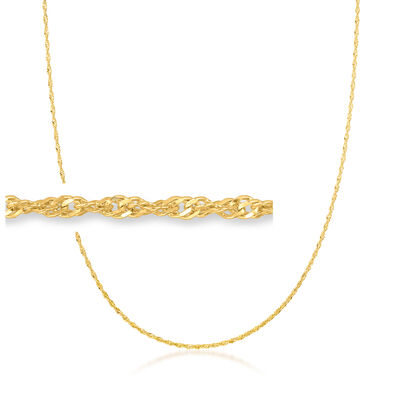
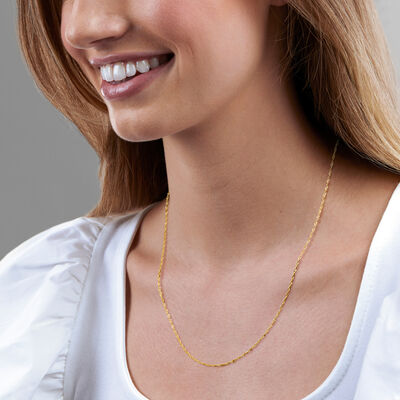
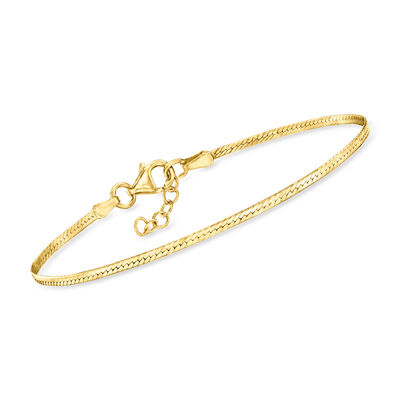
Gold over silicone jewelry features a karat gold or vermeil with a silicone core. Silicone is a rubber-like synthetic polymer, which gives slight flexibility to a piece of jewelry. Italian-made designs will sometimes feature silicone in their flex gold jewelry, wrapping 14kt gold wire around a supple core of lightweight materials. Flex gold jewelry can be twisted and formed for ultimate versatility.
Spring Sale: Up to 40% Off!
Spring Sale: Up to 40% Off!
Spring Sale: Up to 40% Off!


Spring Sale: Up to 40% Off!
Spring Sale: Up to 40% Off!
Spring Sale: Up to 40% Off!
Spring Sale: Up to 40% Off!
Spring Sale: Up to 40% Off!
Spring Sale: Up to 40% Off!
Spring Sale: Up to 40% Off!
Spring Sale: Up to 40% Off!
Spring Sale: Up to 40% Off!
Plated Jewelry
Plated jewelry is a great option that can offer an elegant appearance for a fraction of the cost.
In these types of pieces, base metals are typically plated with precious metals to give the look of fine jewelry for less. The plating process can vary depending on the price and quality of the jewelry. Some pieces are colored through a process called electroplating, while others feature a thin coating of real precious metals to give a higher-end look.
Read on to learn about the most popular jewelry plating types and what makes each one unique.
Gold Plating
Gold-plated fashion jewelry and watches generally feature a primary base metal (usually zinc or brass) that is coated with a small percentage of gold to give it a desirable look at a much lower price point.
Most gold-plated jewelry undergoes a unique process called electroplating, which involves coating a base metal with real gold of 10kt or higher, through an electrolytic process. This method allows the metal to adhere to the piece, helps prevent rust or damage, and also creates a refined appearance. Gold plate can also be achieved through mechanical plating and other techniques. The longevity of the plating depends on how thick the layer of gold is and how often the jewelry is worn.
Silver Plating
Like gold-plated jewelry, silver-plated pieces start with a primary base metal that is coated with a thin layer of real silver, generally through electroplating, though other processes can be used. The result is a bright and attractive appearance for a significantly lower price.
As is the case with most plated jewelry, the longevity of the coating depends on how thick the layer of silver is and how often the jewelry is worn.
Rhodium Plating
Part of the platinum family and one of the most popular plating materials, rhodium is a silvery-white precious metal too rare to use on its own. Rhodium plating is most often used on white gold and sometimes sterling silver to protect these metals from damage and discoloration. Beyond protection, it offers a bright and shiny finish. Black or colored rhodium can also be used to decorate a piece, give it a different tint, or provide a contrast that makes the colors of the gemstones on the design pop.
Palladium Plating
Some plating types work better than others on certain metals. Palladium plating works well on white metals because it’s a member of the platinum family and has a natural silvery color. It is also strong, lightweight, durable and highly resistant to tarnish.
Ruthenium Plating
Another member of the platinum family, ruthenium is sometimes used to plate jewelry to give it a dark, silvery-gray or jet-black color. Ruthenium plating is very strong and resistant to scratches, making it a good choice for soft metals. Just like rhodium, ruthenium is too rare to use as the primary material for jewelry but proves beneficial when used for plating.
Physical Vapor Deposition (PVD)
An industrial technique and alternative to plating, PVD stands for “Physical Vapor Deposition” and the process results in a layer of colored film that forms over stainless steel in a vacuum chamber. PVD is often used on modern stainless steel jewelry designs and sporty watches because it is durable in harsh outdoor conditions. It often has a black sheen, but comes in other metallic colors, as well.
Finishes
A jewelry finish is the final touch that adds distinct style and uniqueness to your favorite designs. Here’s a little bit about each of the most popular jewelry finishes:
- Antiqued – A finish usually applied through oxidation or with a scattered black coating to give the jewelry’s surface an aged, vintage-inspired look.
- Brushed – A low-luster finish with a very fine texture that looks as if it were applied with a wire brush.
- Polished – A buffed-out finish used to produce a mirror-like shine.
- Diamond-Cut – A finish that incorporates highly polished cuts or facets, creating a reflective sparkle similar to the appearance of diamonds.
- Textured – A unique and varying finish with a tactile surface, achieved by a combination of hand- and-machine-applied techniques.
- Hammered – A dimpled finish that looks as if it were applied through various strikes of a hammer. The result is a random, stippled look with an artisanal appeal. A hammered piece can appear either matte or polished.
- Satin – A finish with a frost-like appearance. It is soft to the touch but doesn’t have the same mirror-like shine as a polished piece.
- Matte – A non-reflective finish applied by first polishing the piece and then abrading the surface. Its appearance is slightly duller than a satin finish and not as coarse as a brushed finish.
- Sandblasted – A finish that is intentionally abrased with many pieces of small, coarse material to give the piece a slightly rough, unpolished finish.
- Gunmetal – Sometimes called a "hematite finish" because of its visual likeness to a dark, silvery-gray hematite stone, a gunmetal finish is achieved through many different techniques, sometimes involving black rhodium, ruthenium or even a special gel rubbed over the surface to change the color of the piece.
- Florentine-style – Florentine is a special kind of texturing formed by engraving a cross-hatched pattern along the jewelry’s surface.
How to Care for Your Jewelry
Sterling Silver, Gold Over Sterling and Gold or Silver Plating
Using a silver polishing cloth, gently rub the surface to remove any built-up tarnish or dullness. Avoid contact with household chemicals, perfumes and personal care products, which may cause faster tarnishing. Remove jewelry prior to exercise or exposure to water.
Gold and Platinum
Add a few drops of mild dish soap to a bowl filled with warm water. Allow your jewelry to soak for several minutes, then use a soft brush to gently remove dirt, oil and debris. Rinse thoroughly and dry with a soft cloth to keep your jewelry looking like new.
Learning about the metals, finishes and plating processes used across the many different jewelry categories on the market is not only interesting but an important part of an informed jewelry buying experience. With a solid understanding, you can confidently shop our wide range of fun fashion finds and high-quality fine jewelry styles here at Ross-Simons!